What a memorial page is for
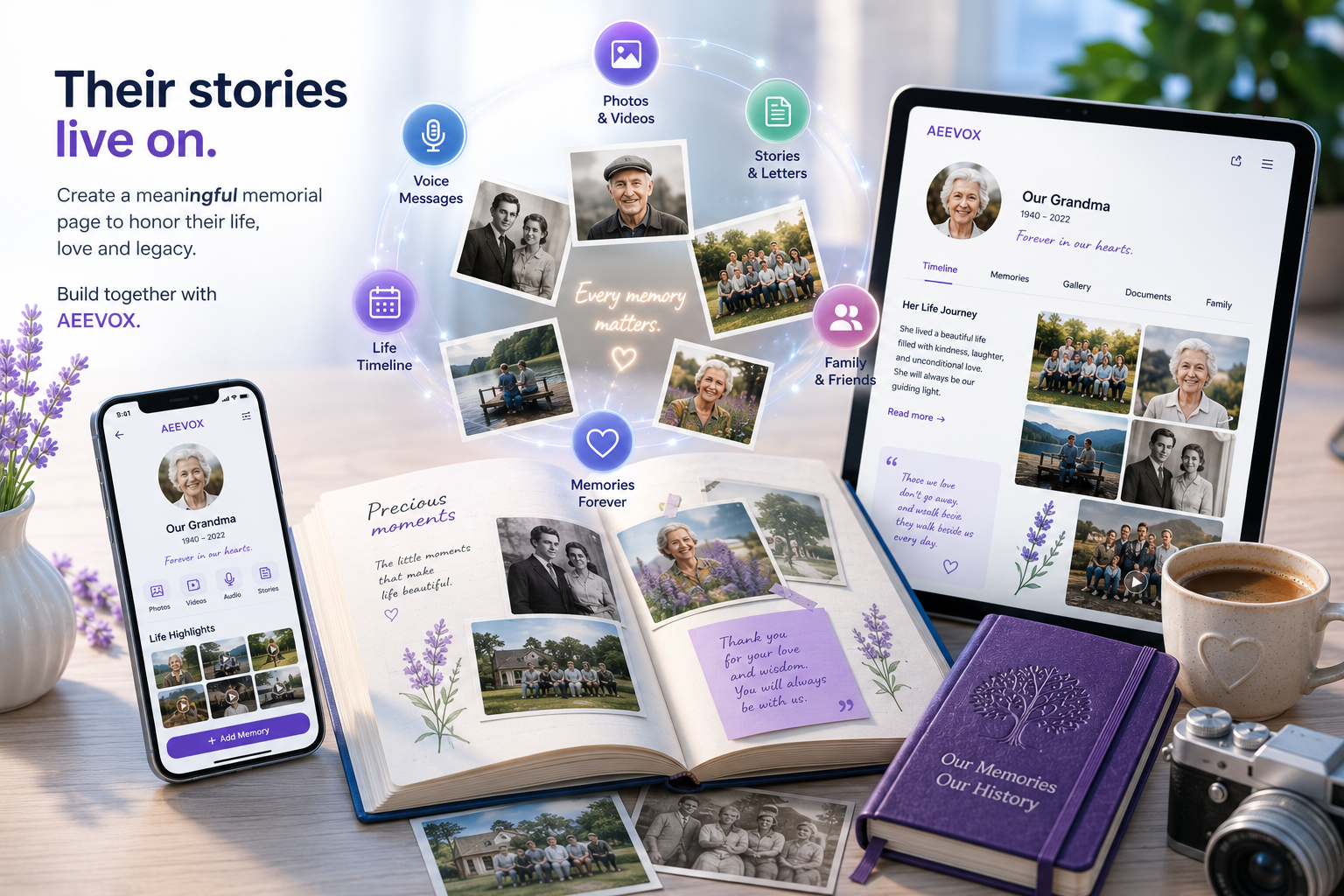
It is not a database entry. It is a room in the digital world where a person's story lives, told in their own voice when possible, and in the voices of those who loved them when not.
The core sections
The introduction
A photograph, a name, dates, and a single sentence that captures who they were. Not a title, not a role — a truth.
The life story
Written in the third person by someone who knew them well, or first-person if the subject wrote it themselves. Between 400 and 1000 words is usually right. Enough to matter; short enough to be read.
Voices
Invite family and friends to contribute short memories. Two paragraphs each. The tapestry effect matters more than the length of any single thread.
The gallery
Twenty to fifty carefully chosen images. Captioned. Ordered chronologically or by theme, not by upload date.
The messages
A private guestbook where visitors can leave notes for the family. This is often the section that families revisit most.
Privacy is a design decision
Memorial pages can be fully public, family-only, or invitation-only. The right answer depends on the person. A public teacher who touched hundreds of lives is different from a private grandmother whose family wants to grieve quietly.
Make it living
Add anniversary reminders. Let contributors add memories for years to come. A memorial page is at its best when it is still being written a decade later.