The one-sentence version
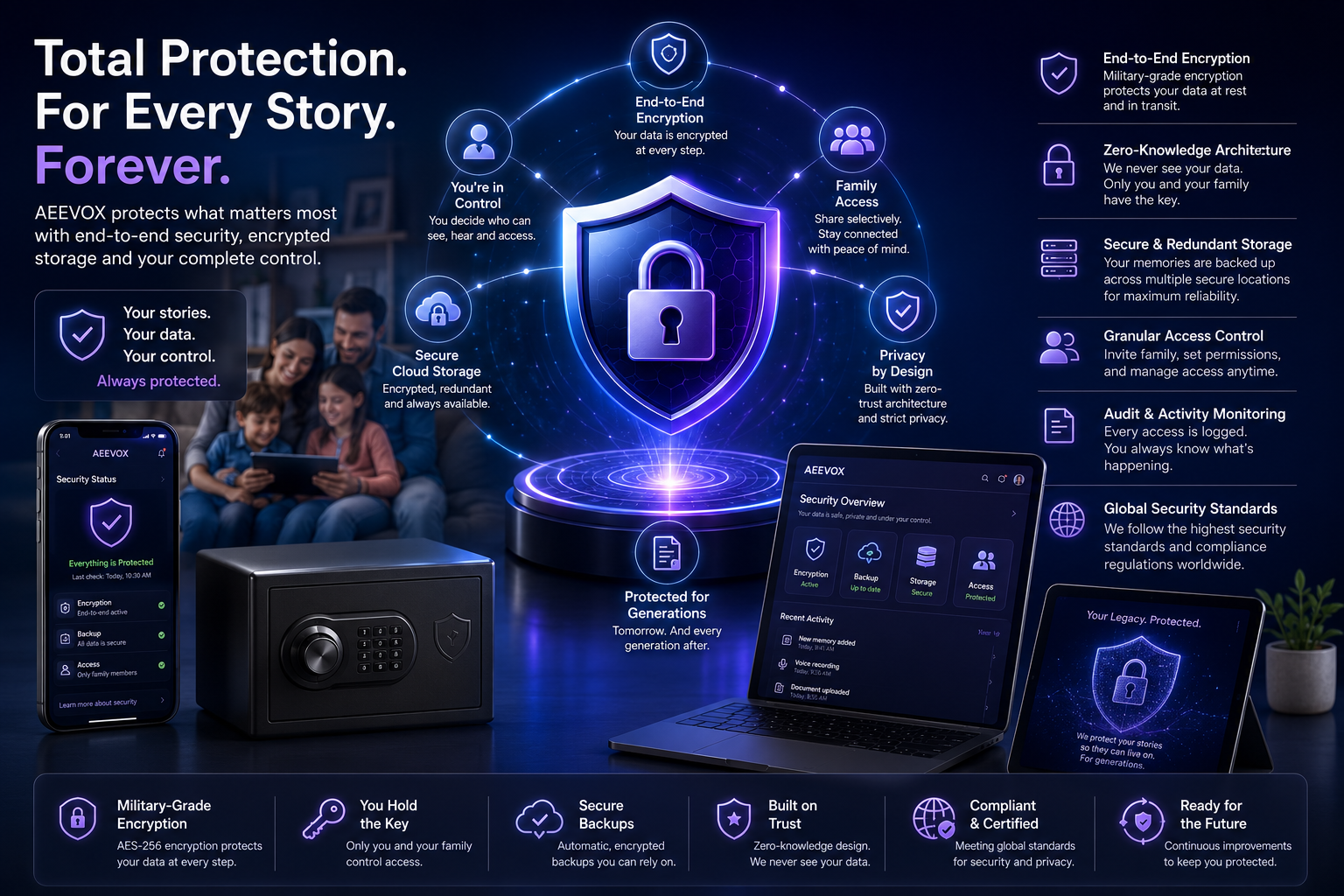
End-to-end encryption means the company holding your files cannot read them. Only you and the people you choose to share with can.
Why it matters for legacy
A vault holding a lifetime of letters, photos, and voice recordings is a target. Employees, hackers, and even courts can — in theory — request access to unencrypted data. End-to-end encryption removes that possibility at the source.
How it actually works, without the math
Imagine a lockbox with two keys. One is public — you can hand out copies freely. Anyone can put something in the box using the public key. The other is private — it lives only on your device, and only that key can open the box.
When your family member opens a shared memory, their device uses a matching private key to unlock it. The server in between is a courier that cannot read the mail.
What it does not protect against
- A weak password that someone can guess.
- Malware on your own device.
- Sharing content with the wrong person on purpose.
Encryption protects the transport and the storage. It cannot protect against decisions.
Questions to ask any legacy service
- Are files encrypted on my device before upload?
- Who holds the keys — me, or the company?
- If I forget my password, can support "recover" my data? (If yes, it is not truly end-to-end.)
- What happens to my keys when I die, and who inherits them?
A legacy vault worth trusting can answer all four.