Begin with the living
The most valuable source of family history is the oldest living person you can call this week. Photos and documents are silent. People speak.
The five questions that unlock a life
- Where were you born, and what do you remember about it?
- What did your parents do for a living?
- Who is the ancestor you wish you had met?
- What is a family story that only you know?
- What would you like your great-grandchildren to know about you?
Capture, then verify
Record the conversation (with permission). Transcribe the highlights. Then cross-check names, dates, and places against public records or other relatives. Memory is generous with meaning and careless with dates.
Build the skeleton first
Start with three generations: you, your parents, your grandparents. Add names, birth years, birth places, and death years if applicable. Do not chase every branch at once — completeness is the enemy of progress.
Add texture, not just data
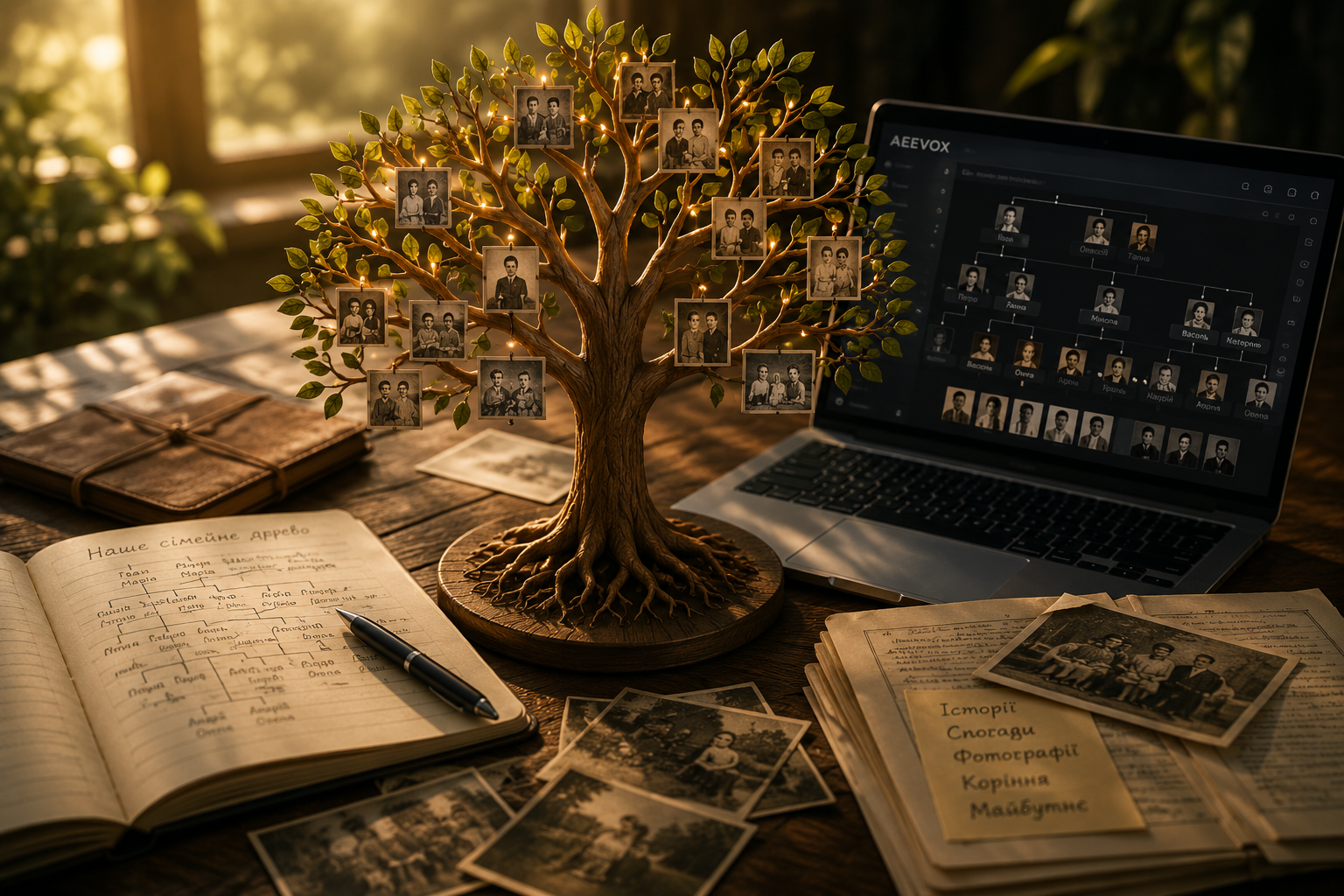
A tree of names is a phone book. A tree with one paragraph per person is a family. For each ancestor, write down:
- One sentence about their character.
- One story someone told you about them.
- One photograph, if you have it.
Share early
Invite relatives to review and correct. Your uncle will remember a name your mother forgot. The tree grows fastest when it is visible.