The letter
In 1974, a young man wrote a letter to the child he did not yet have. He sealed it, wrote "For my first grandchild, on their wedding day" on the envelope, and put it in a shoebox in the attic.
He died in 1998. His son cleaned out the attic in 2004. The shoebox went to a storage unit and sat, unopened, for another twenty years.
The discovery
In early 2024, the granddaughter — now 27 and engaged — was clearing the storage unit before her wedding. She found the box. She found the letter.
The reading
She read it aloud during the reception, standing at the head table, holding a piece of paper written by a man she had never met.
It was not a long letter. It described the room he was sitting in, the song playing on the radio, and the exact shape of the shadow the streetlamp cast on his kitchen wall. It ended with a single sentence: "I do not know your name, but I have already loved you for a long time."
What it changed
Her father — the son who had never opened the box — sat down and cried for a father he thought he had finished mourning. Three of the wedding guests went home that night and started writing letters of their own.
The lesson
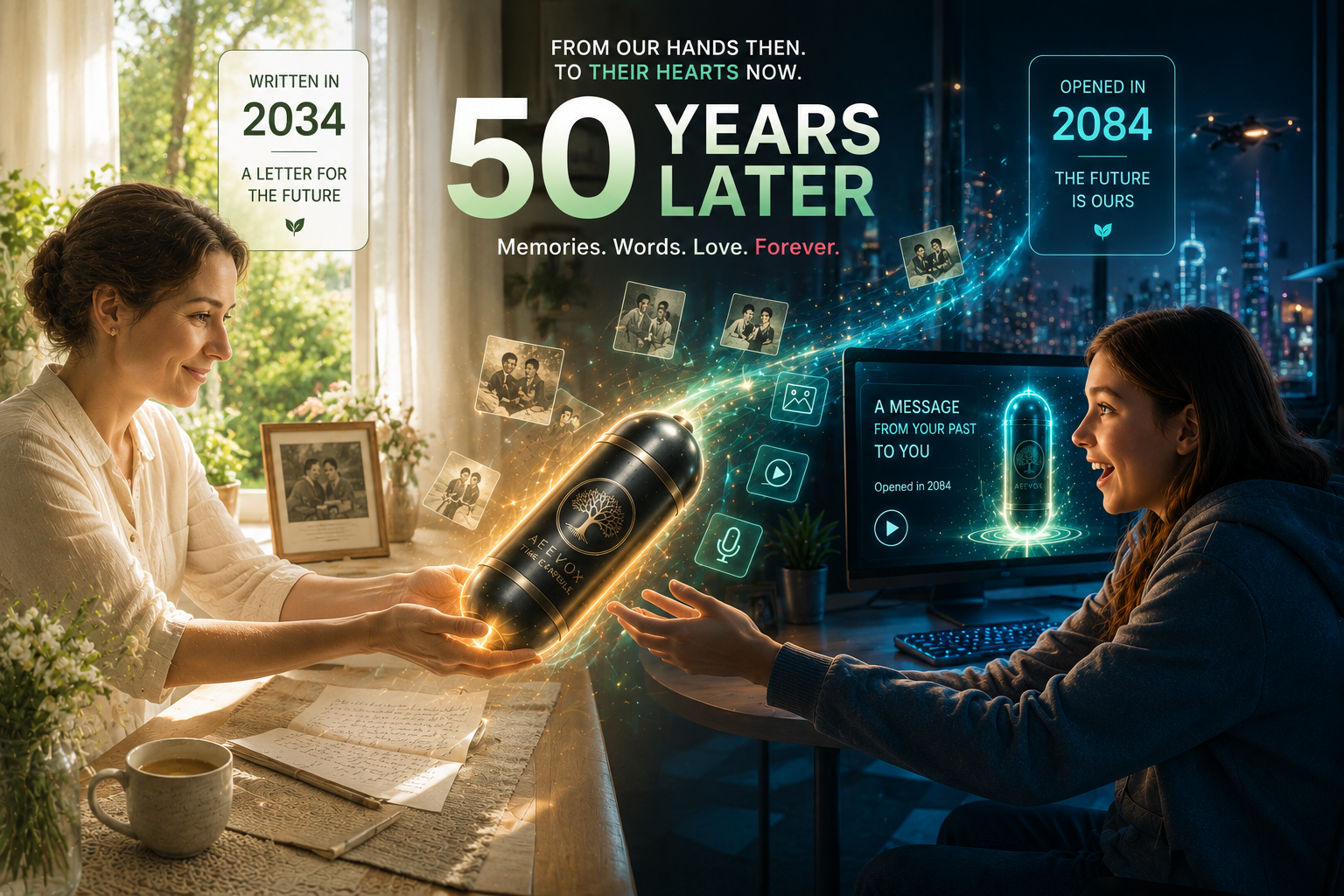
The letter almost did not survive. A shoebox in an attic is a coin toss with fifty-year odds. This is precisely the problem a digital time capsule solves — durable, dated, and impossible to lose. The message stays intact. Only the moment of opening moves through time.