The opening scene of this article is a work of fiction: its protagonist and the wooden box do not exist. All subsequent stories about real people are documentary and based on the sources listed at the end.
Invisible Threads
The house was sold in the spring. Before handing over the keys, Martha went up to the attic one last time — simply to say goodbye.
It smelt of dust, dry wood, and something faintly sweet, like old apples. Light streamed through a small window, motes of dust dancing slowly within its beam. Beneath a rafter, behind two handleless suitcases, sat a wooden box. Martha recognised it instantly: it was where her grandmother had kept her buttons and threads. Or so she had always thought.
There were no buttons there.
There was a yellowed photograph: a man in a hat, a woman holding an infant, two boys in oversized jackets. Not a single familiar face. There was a letter in an envelope bearing the address of a town Martha had never seen on a map. There was a small iron key — to what, she did not know. And there was a scrap of paper on which a surname had been written in her grandmother's hand.
It was a surname Martha was hearing for the very first time in her life.
She sat straight down on the floorboards, holding the photograph in her lap, and suddenly realised: her grandmother had possessed an entire world she had never spoken of. Somewhere out there were people for whom this surname was their own. Perhaps their grandchildren are still alive today, thousands of miles away, speaking a different language, similarly unaware that in an old house, up in the attic, lies their shared history.
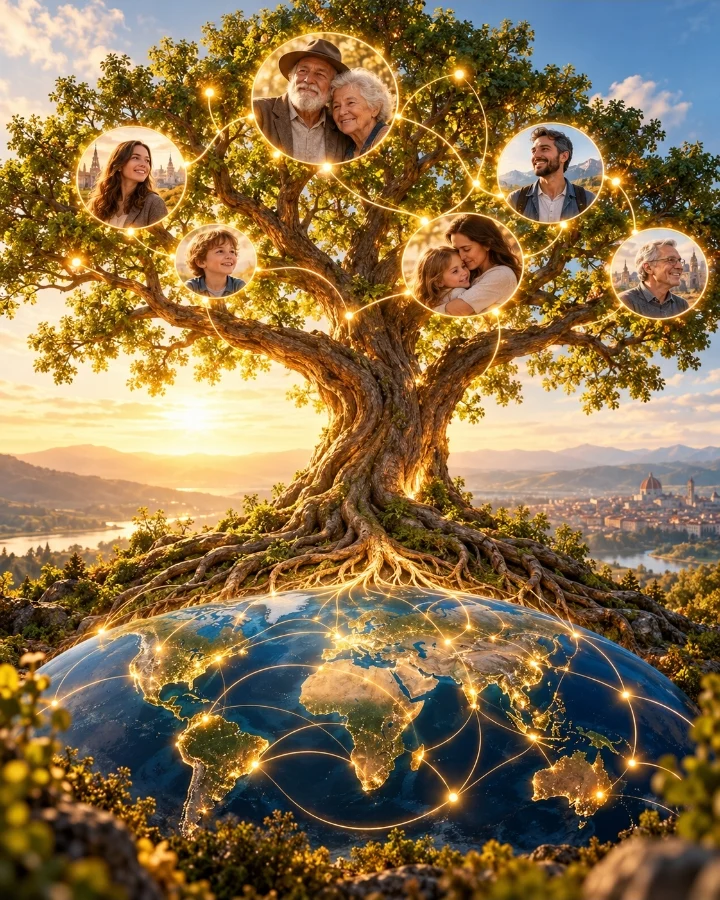
Martha's story is fictional. But what she felt is familiar to millions of people.
Our family trees have long outgrown national borders. One branch might have stayed in Ukraine, a second moved to Britain, a third ended up in Canada, and a fourth in Argentina. Three or four generations down the line, the descendants of these people might cross paths in an airport, walk past each other in the street, or even work for the same company — entirely unaware that they share a great-great-grandmother.
Therefore, a family tree is not merely a lineage from ancestors to descendants. It is a web of shared memory scattered across continents. And sometimes, to reconnect it, all it takes is a single name, one photograph, or one small object.
Here are three true stories that prove this.
Annie Moore: The Girl History Lost Twice
On the 1st of January 1892, a new federal immigration station opened on Ellis Island in New York Harbour. The first person to be registered there was seventeen-year-old Annie Moore from County Cork, Ireland. She had arrived on the steamship Nevada alongside her two younger brothers, Anthony and Philip, hoping to see her parents, who were already living in New York, after four years of separation. This account is provided by the U.S. National Park Service and HISTORY.
The station's first building was made of wood — Georgia pine. Annie walked through its grand doors, and an official inscribed her name on the very first page of the very first registry book. She was presented with a ten-dollar gold coin and a Happy New Year greeting. That day, the newspapers were looking for a good story — and they found one.
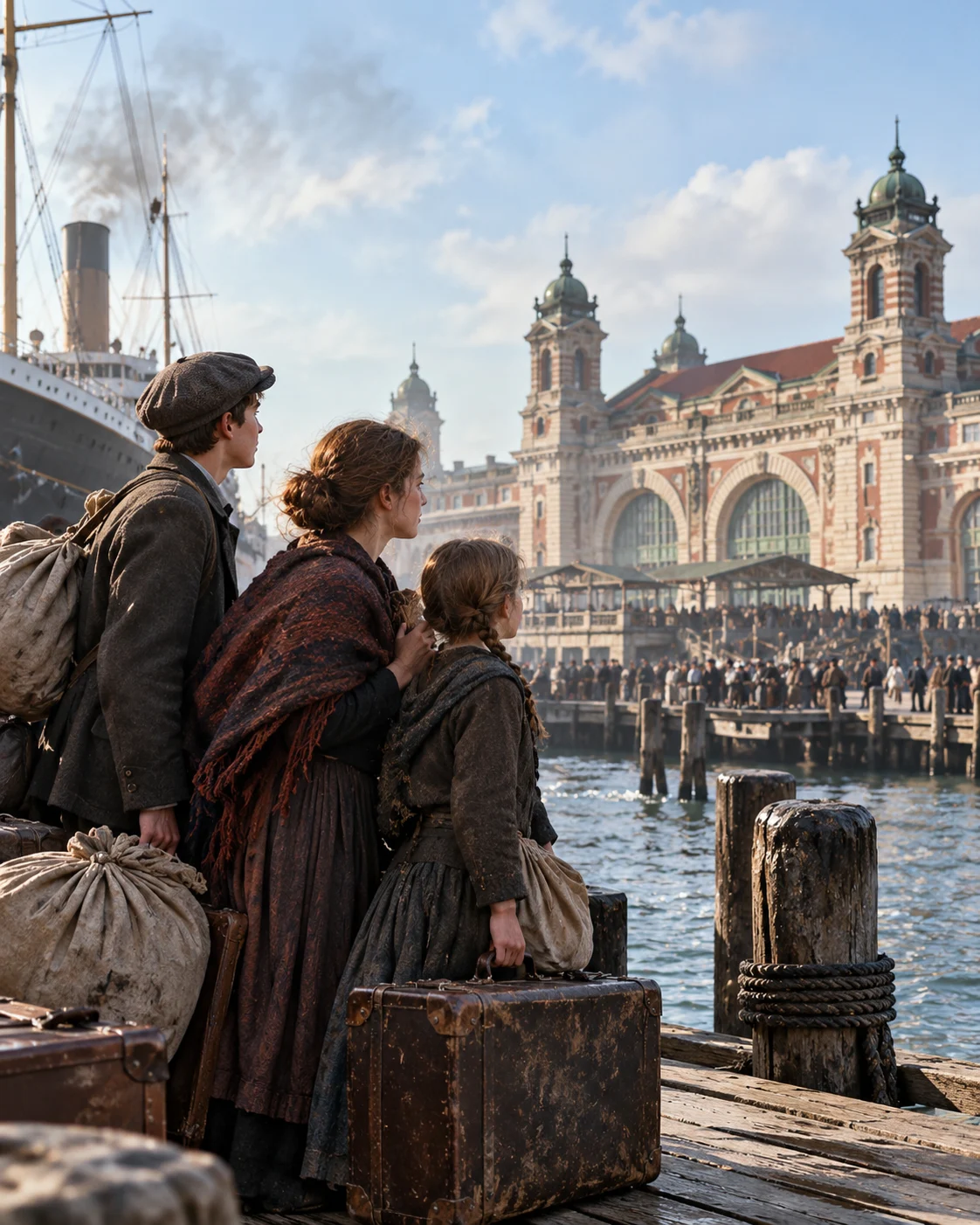
And then, Annie Moore was lost for a second time.
First, the paper vanished: in June 1897, the wooden station burnt to the ground, taking the registry books with it. Then, the person herself disappeared — or rather, she was substituted. For decades, it was believed that Annie had moved out West, married, and died in a 1923 tram accident in Fort Worth, Texas. The descendants of that woman were invited to ceremonies in Ireland and on Ellis Island as the family of the first immigrant.
But that was a different Annie Moore — one born and raised in America.
In 2006, genealogist Megan Smolenyak and New York Commissioner of Records Brian Andersson scrutinised the documents and discovered the real Annie. She had never moved away. She spent her entire life within a few blocks of the Lower East Side in Manhattan. She married Joseph Augustus Schayer, who worked at the Fulton Fish Market. She gave birth to at least ten children — five of whom died before reaching the age of three. Annie died in 1924 from heart failure. She was buried without a headstone.
Imagine this strange injustice: a name known to the entire nation lived for years with someone else's biography. Meanwhile, her real life — hard, mundane, filled with toil and loss — lay in the archives until someone dared to verify it.
Others followed in Annie's footsteps. According to the U.S. National Park Service, between 1892 and 1954, nearly 12 million immigrants passed through the Ellis Island station. This is not just a statistic. It is nearly twelve million suitcases, farewells, first nights in a strange city, and letters sent back home.
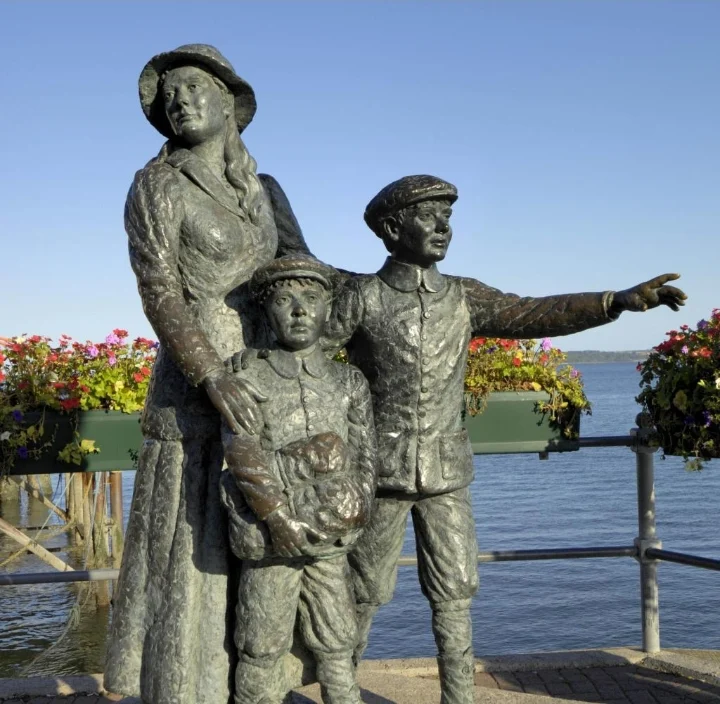
Annie's story teaches us a simple truth: genealogy sometimes restores not just a person's name, but their true history — for their descendants and for us all.
Walter Senft's Wedding Ring: An Object That Survived the War
Some stories return not through documents, but through an object.
In April 1940, the German criminal police sent Walter Senft to the Dachau concentration camp as a so-called 'professional criminal'. The Nazis stripped him of his wedding ring. From September 1940 until his liberation, Walter was a prisoner in the Neuengamme concentration camp. It was only in 2020 that the Bundestag officially recognised people persecuted under such labels as victims of the Nazi regime. These facts are detailed by the Arolsen Archives — an international centre on Nazi persecution.
The wedding ring lay in an archive for decades. A small circle of metal, which once symbolised a promise, had become a silent witness.
When the Arolsen Archives set out to find Walter's family, an astonishing truth came to light. Walter's grandson, Patrick May from the US, and Catherine Guebey-Robert from France, the granddaughter of his sister Emma, had never known of each other's existence. For years, they had each been searching for traces of Walter independently. "When we started our search for traces of Walter in parallel a few years ago, neither of us knew of the other's existence," Patrick told the archive.
Their families had been scattered by the very same era. After the war, Emma lived in France with a Frenchman, a former prisoner of war, and faced prejudice there because of her German heritage. Patrick's mother, Rosemarie, had grown up in a children's home because her father had been persecuted. She later married an American serviceman and moved to the US.
In June 2023, Patrick and Catherine met for the first time — and, together with their relatives, travelled to Bad Arolsen to receive Walter's wedding ring.
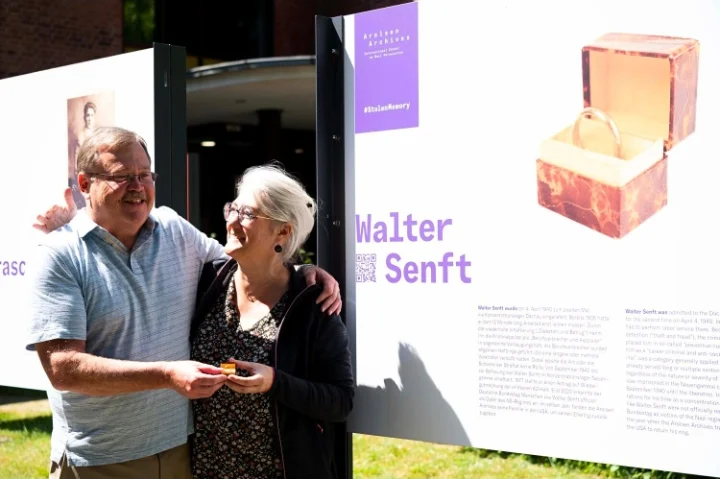
We do not know exactly what they felt in that moment, and we will not invent it. But we do know what this object had become. It was no longer just a wedding ring. It was a witness to a person's life, the violence endured, and the loss suffered. And at the same time, it was the focal point where two branches of the same family, torn apart by war, finally touched one another once again.
Sometimes, family history can be pieced back together thanks to a single object that survived decades of silence.
Crescenciana Tan: A Legacy Not Measured in Money
Her grandchildren called her Lola — the Filipino word for grandmother.
Crescenciana Tan was born in the Philippines and survived the Japanese occupation during the Second World War. Following the death of her father, she, the youngest of four children, began working to support her family. She toiled in the rice fields beneath the scorching sun. She rode to the market on a buffalo-drawn cart to sell dry goods. And when she became a mother herself, she left home to work as a maid in order to provide for her children.
In 1982, Lola moved to the US to help raise her grandchildren. She died in 2016 at the age of 96. In her final years, her grandson Kenneth stayed by her side. He preserved her stories in his drawings, and later came to StoryCorps so that, together with his mother, Olivia Tan Ronquillo, they could recall the most important lesson his grandmother had taught him.
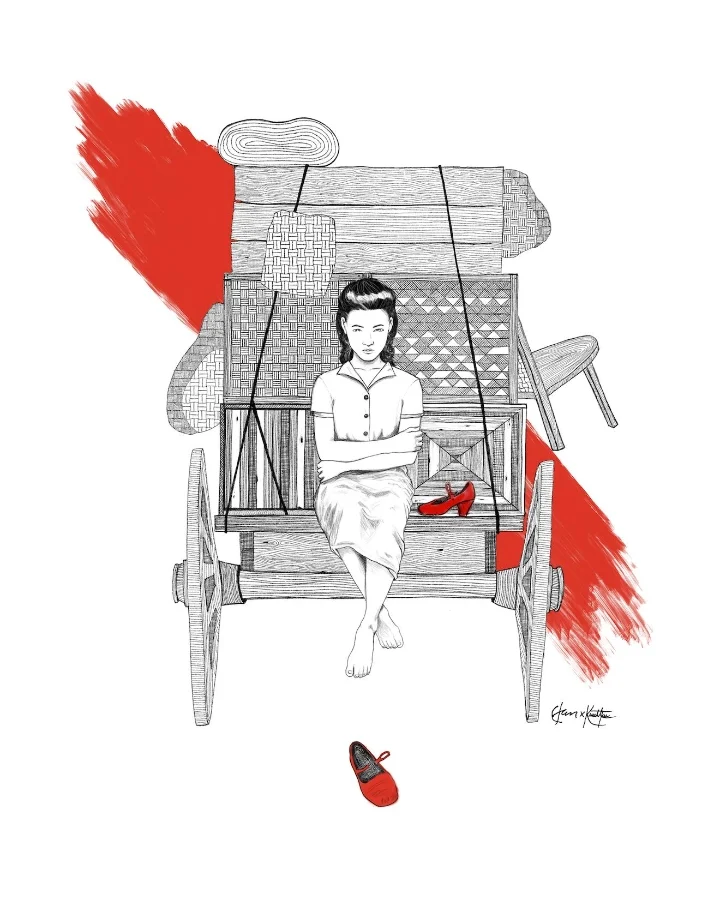
The recording captures a phrase that is hard to forget: "It was not so much of hugging or saying I love you. But it was all the things she did."
Lola did not leave behind a fortune. She left something else: the habit of working without complaint. The ability to sacrifice without demanding gratitude. A love expressed not in words, but in the rice cooked every morning and the sleeves she carefully mended. And if, in reading this, you are reminded of your own grandmother, mother, or grandfather — that is legacy. It is already living within you.
A person might not leave behind great wealth. But they can leave something far more precious — a part of themselves in the generations to come.
When a Family Scatters Across the Globe
The stories of Annie, Walter, and Lola are of the past. But the very same thing is happening today, only faster.
Family branches diverge due to emigration and war, study and work, and marriages to people from other countries. Within a few generations, languages shift: grandchildren no longer understand the lullabies sung by their great-grandmother. Surnames are rewritten to fit new spellings or changed upon marriage. Holidays and recipes blend with local traditions. This is how blended families are born, where three languages are spoken around a single dinner table — and it is a beautiful thing.
But alongside the new, something is also lost. First cousins still write to each other; second cousins often do not. And all that remains of distant relatives are fragments: 'I think someone moved to Canada', 'Grandad had a brother, but they never spoke of him'. Family archives — letters, photos, recordings — frequently become the final thread left to pull on.
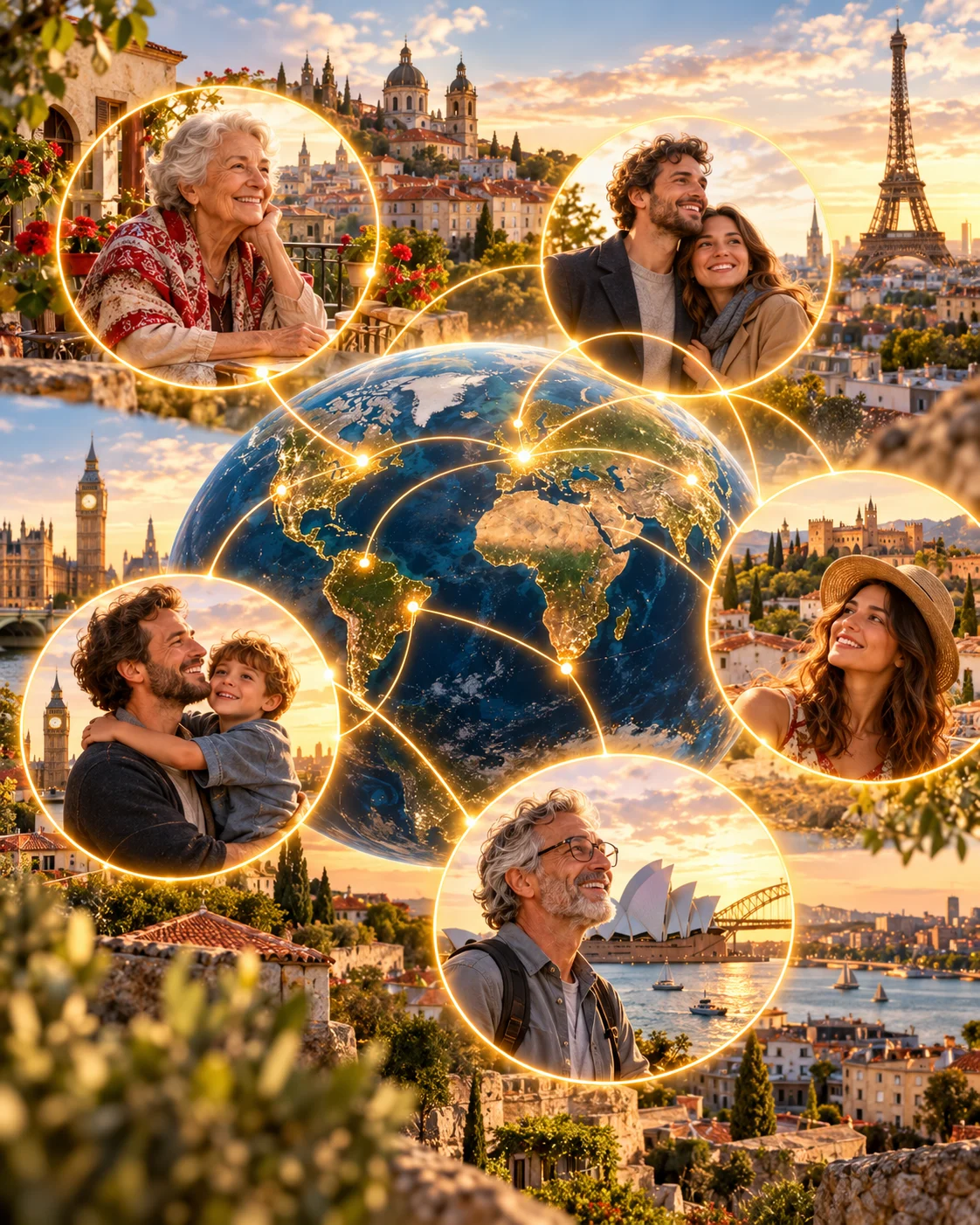
And one more honest observation. Not every family possesses a perfect history. Families experience divorce and adoption, loss and conflict, difficult decisions and blank spaces that no one knows about. A family legacy ought to reflect real life, not an idealised tree full of photographs of smiling faces.
Moreover, family is not just blood. A stepdad who taught you to ride a bicycle. An honorary auntie whose house was always open for a sleepover. A neighbour who became a grandmother to children who had none. People who became family through care, upbringing, and love deserve their place on the tree as well.
What We Truly Pass Down as Legacy
When we hear the word 'legacy', we think of property, money, or jewels. But the most valuable things often look entirely different.
- A father's voice, recorded many years ago on an old phone — laughing and saying, 'Alright, turn it off now'.
- A grandmother's recipe for varenyky (dumplings) with a note in the margins: 'don't skimp on the dough'.
- A photograph of a great-grandfather whose name is all but forgotten, yet whose eyes gaze out from your son's face.
- A mother's letter written to her child the night before an operation.
- A story about the first family home — with its leaky roof and the happiest of years.
- The tale of relocating to a new country with a single suitcase and an address on a scrap of paper.
- A wedding tradition kept alive for a fifth generation, even though no one remembers where it came from.
- A recording of how your parents met: at a bus stop, in the pouring rain, over a forgotten umbrella.
- A few words of encouragement for grandchildren who have not yet been born.
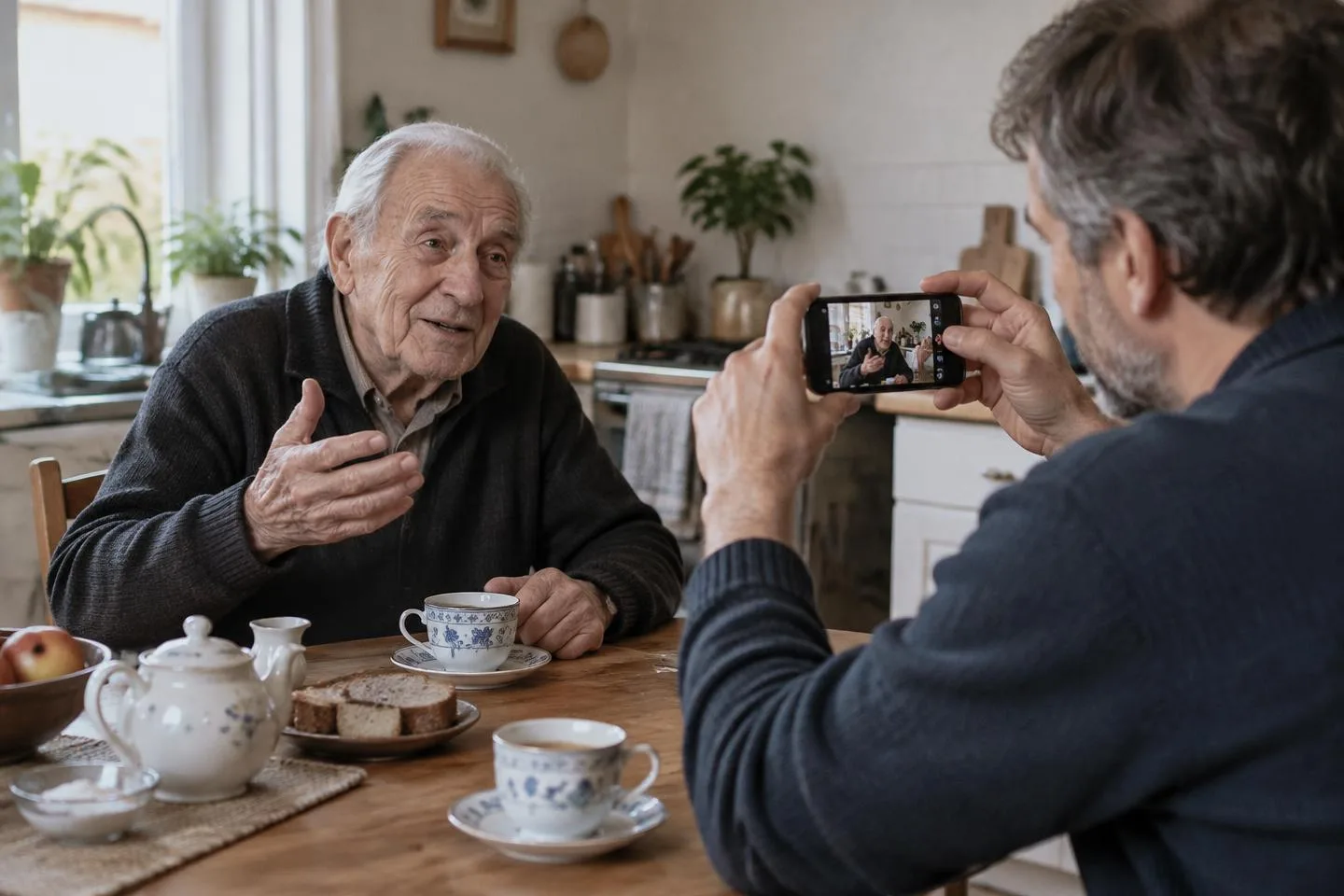
We frequently realise the true worth of a simple voice message only when we can never hear that voice in person again.
We discussed how to start such a conversation with your parents in the article 'How to Interview Your Parents Before It's Too Late', and about preserving old photographs in the piece 'How to Preserve Family Photos for Generations'.
A Tree That Grows in Two Directions
A conventional family tree tells us who came before us. But a living family tree also has a future.
Its past consists of the names, photographs, documents, and stories of ancestors.
Its present holds the living connections, family events, voices, and traditions we are forging right now.
Its future contains the memories and messages we wish to hand down to our children, grandchildren, and descendants yet to be born.
Our ancestors could not tell us everything. But we still have the chance to tell more to those who will come after us.
AEEVOX — A Digital Home for Family Memory
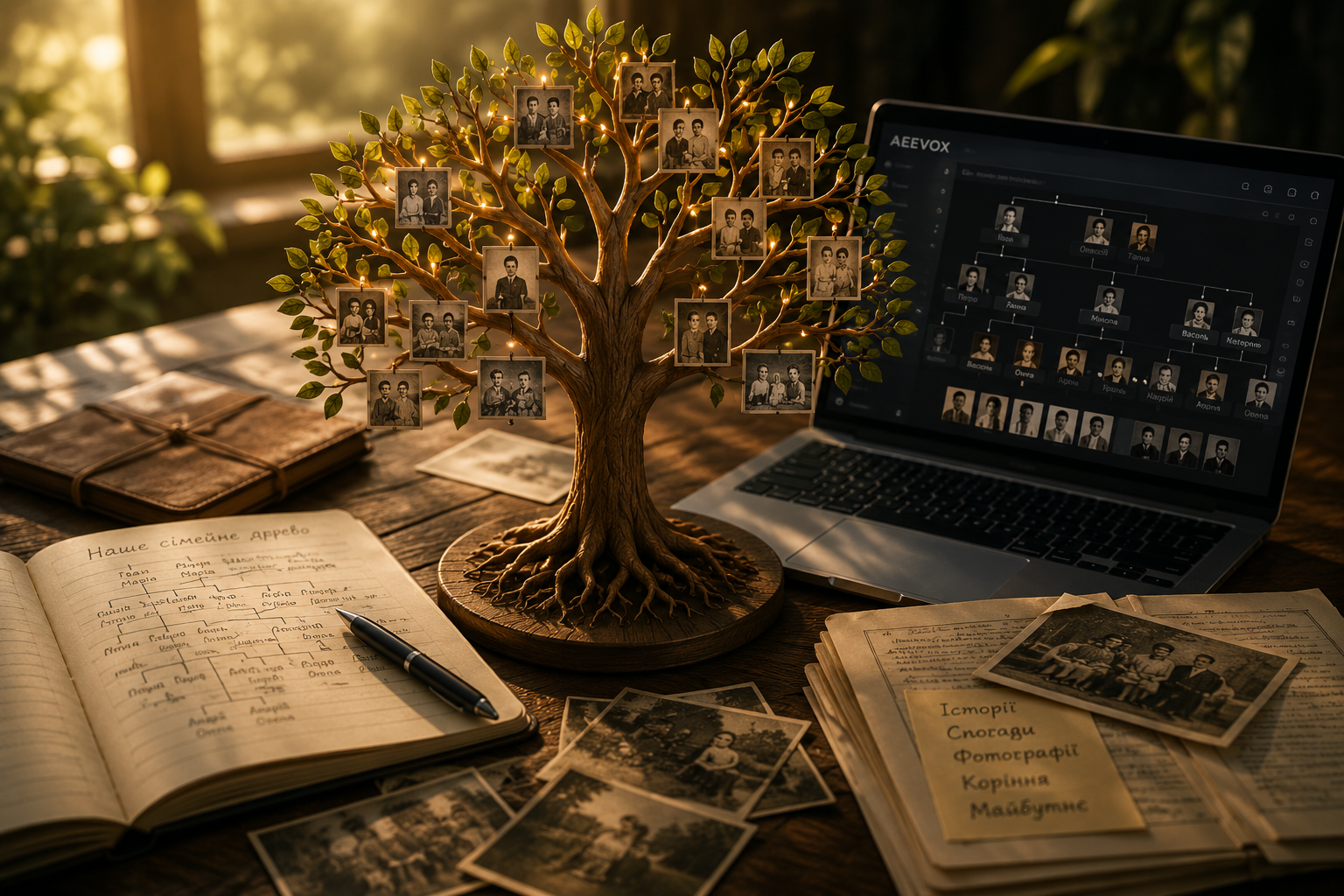
This is exactly why we created AEEVOX: so that everything typically scattered across phones, cloud storage, and attic boxes might have a single, peaceful home.
- Family tree (Family Tree) — the structure of a family, its generations and connections, including those who became kin not by blood.
- Vault of memories (Memory Vault) — an archive of important family photos, documents, and materials.
- Voice memories — the stories of loved ones told in their own voices.
- Video memories — family histories captured on video.
- Letters — personal messages to children and future generations.
- Time-delayed delivery — the ability to schedule a message to arrive on a chosen day in the future.
AEEVOX does not automatically search for relatives, perform DNA analysis, or establish kinship for you. It is no substitute for real-life communication between family members. It merely helps to preserve a fraction of what people wish to hand down to one another. We have explained how to take the first steps in the article 'Starting Your Family Tree from Scratch', and regarding messages biding their time — in the piece 'When Words Wait'.
How to Start Your Family Legacy
There is no need to instantly build a tree stretching back ten generations. Start with five simple steps:
- Record a story from the eldest member of your family — even just for ten minutes.
- Label old photographs: names, dates, places.
- Draw the first branches of your family tree — even if only on a piece of paper.
- Gather family letters, stories, and traditions in one place.
- Record your own message for your children or grandchildren.
And bear in mind privacy. Obtain the consent of living relatives before sharing their stories, and do not disclose personal information without permission. Memory should protect people, not put them on display.
A Voice Fifty Years On
Imagine a child fifty years from now. They open their family history and see the names of people they have never met.
They find a photograph of their great-grandmother — young, wearing a funny hat, with the sea in the background.
They read a letter penned before they even existed.
And then they press play on a recording — and suddenly hear the voice of their ancestor. A few simple words spoken many decades ago: 'Hello. I do not know what your world will be like. But know this: you were already loved.'
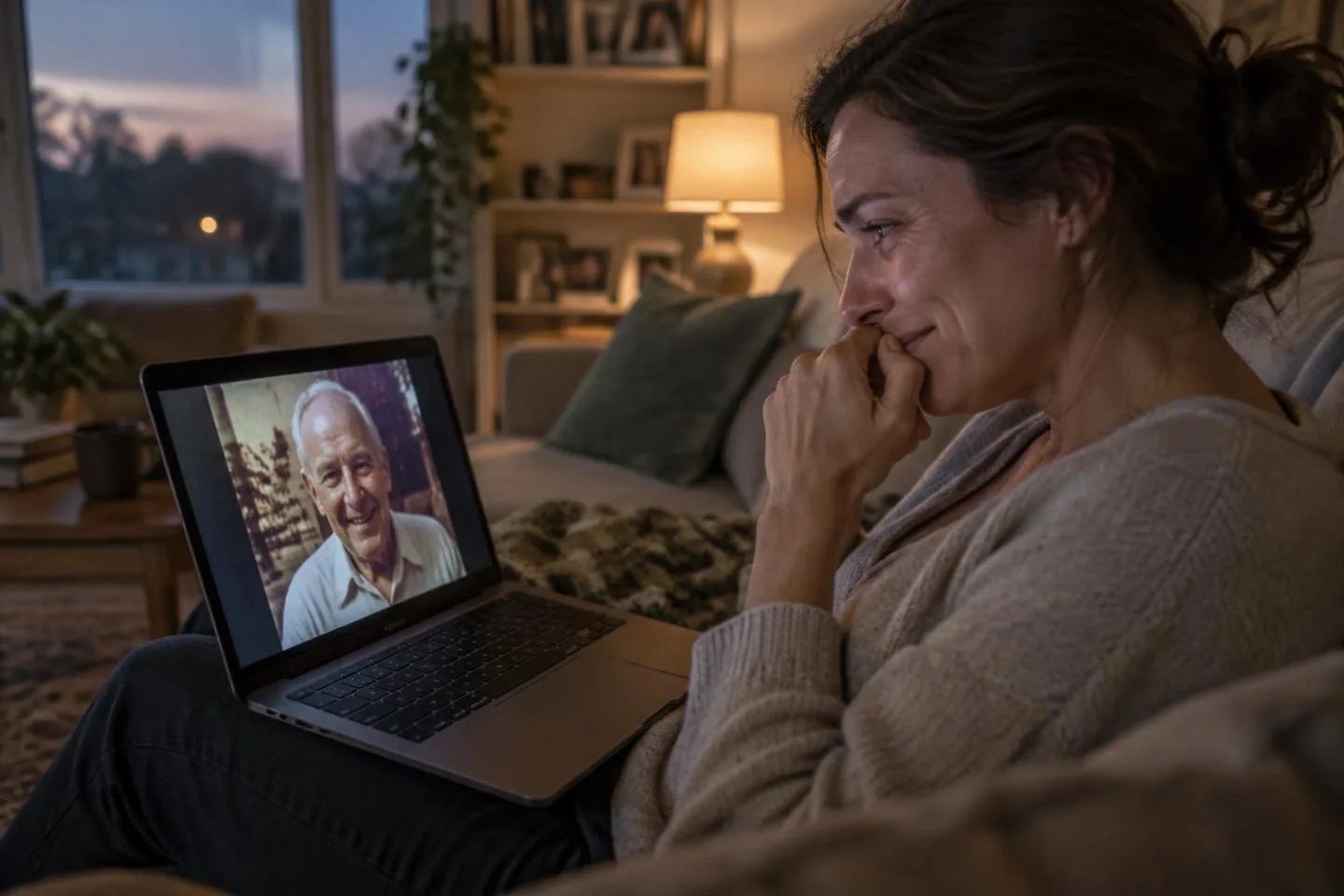
In that moment, the years cease to be an insurmountable distance.
We cannot know what the world will become in a hundred years' time. But we can ensure that a fragment of our love endures within it.
Start your family's history with AEEVOX. Open your family tree — if you do not yet have an account, we will invite you to create one, and then immediately return you to the tree.
Two more true family stories from this section: "Lolo and Momon", about two boys from the Titanic whose mother recognised them in a newspaper photo, and "A Long Way Home", about Saroo Brierley, who found his mother 25 years later using satellite images.
Real Stories and Historical Sources
- U.S. National Park Service — Ellis Island: Frequently Asked Questions
- U.S. National Park Service — Ellis Island: Immigration
- HISTORY — Remembering Annie Moore, Ellis Island's First Immigrant (research by Megan Smolenyak and Brian Andersson)
- Arolsen Archives — #StolenMemory: A wedding ring helps to heal trauma
- StoryCorps — Lola's Work: What a Grandmother Taught Her Family About Love (recording and audio)
The photo of Patrick May and Catherine Guebey-Robert, the photo of the Annie Moore statue in Cobh and Kenneth Tan's drawing are published with permission; credits appear in the captions. All other images are artistic illustrations and reconstructions, not historical photographs or portraits of the real people discussed.