Asleep on a station bench
In 1986, five-year-old Saroo lived with his mother, brothers and sister in the town of Khandwa in central India. The family was very poor. His mother worked hard, and his older brother Guddu searched trains for dropped coins to help out.
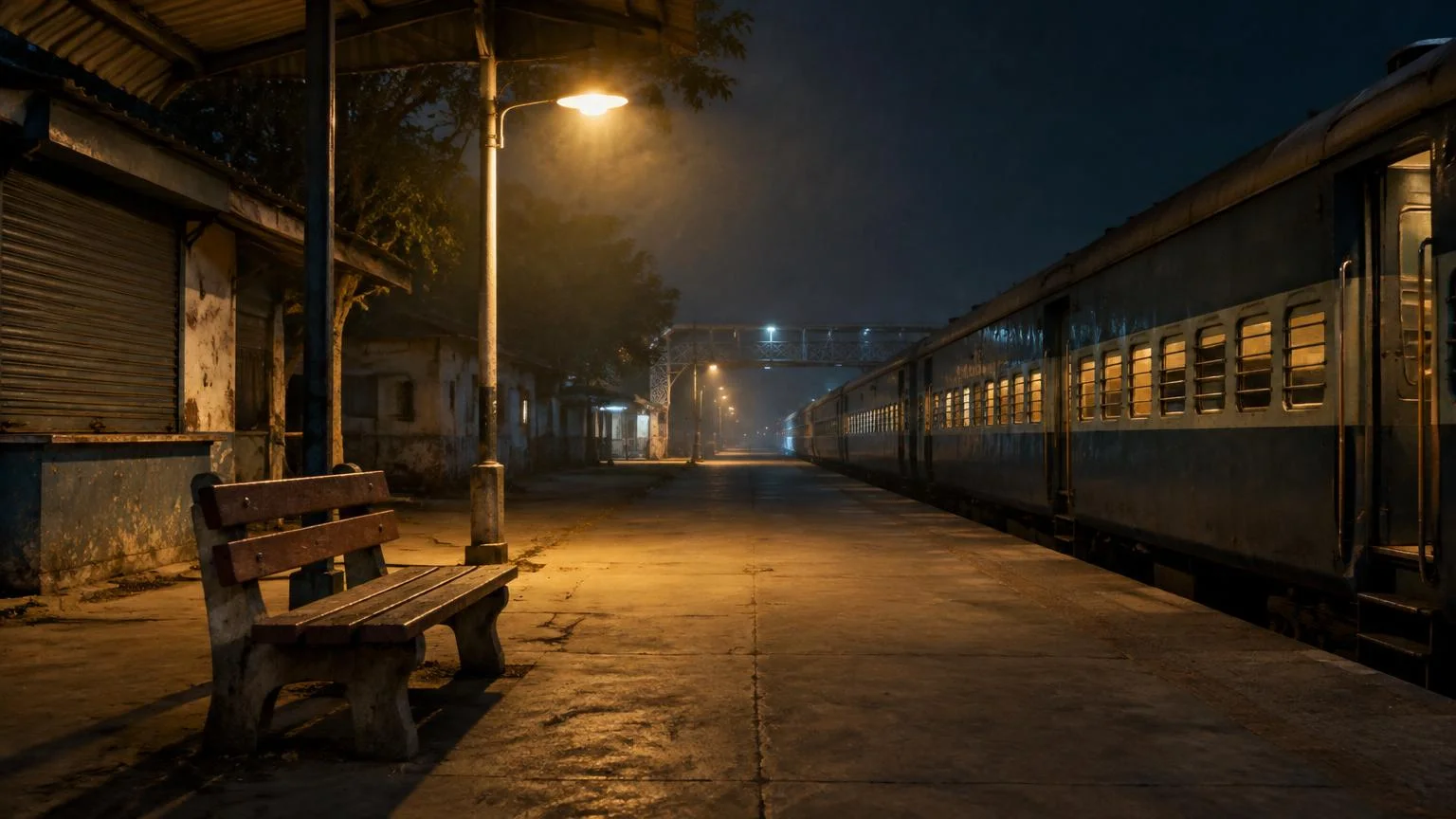
One evening Saroo begged his brother to take him along. They rode a train to the town of Burhanpur. There Saroo was so tired that he fell asleep on a bench. His brother promised to be back soon.
When Saroo woke up, his brother was gone. A train stood at the platform, and the boy decided Guddu must be inside. He climbed into a carriage and fell asleep again. He woke, as he later recalled, about 14 hours later, in Calcutta, 1,500 kilometres from home.
A boy who did not know the name of his town
Saroo could not read. He knew neither the name of his town nor his family's surname. For several weeks he lived on the streets of Calcutta, begging and learning to trust no one. Eventually he was taken into an orphanage.
From there he was adopted by Sue and John Brierley from Hobart, on the Australian island of Tasmania. At six, Saroo had a new family, a new country and a new surname. He loved his new home. But the memories of his mother, his brother and the narrow lanes of his home town never went away.
Searching from above
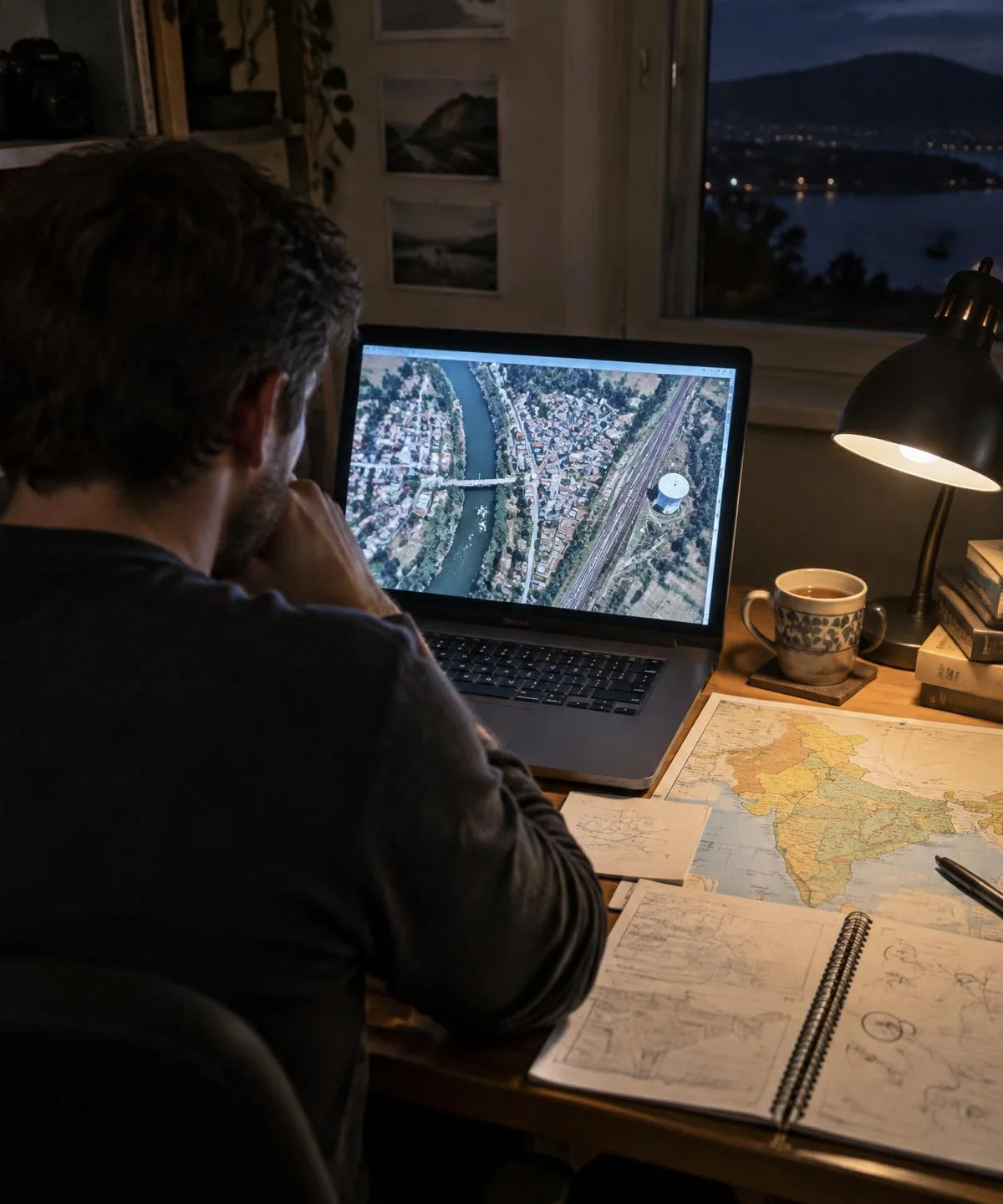
As an adult, Saroo began looking for his home town on Google Earth. He described it to the BBC like this: "It was just like being Superman. You are able to go over and take a photo mentally and ask, 'Does this match?' And when you say, 'No', you keep on going and going and going."
Then he came up with a more precise method. Saroo multiplied his approximate time on the train, about 14 hours, by the speed of Indian trains. That gave roughly 1,200 kilometres. He drew a circle on the map centred on Calcutta and started checking stations along it.
In 2011 he came across Khandwa. Zooming in, Saroo recognised places from his childhood, including a small dam where he used to play in the water. According to Google, he moved from one landmark to the next until he found a familiar neighbourhood, street and roof.
A locked door
In 2012 Saroo flew to India. In Khandwa he found his own way to his neighbourhood, Ganesh Talai. But the door of the old house was locked, and it looked as if no one had lived there for a long time.
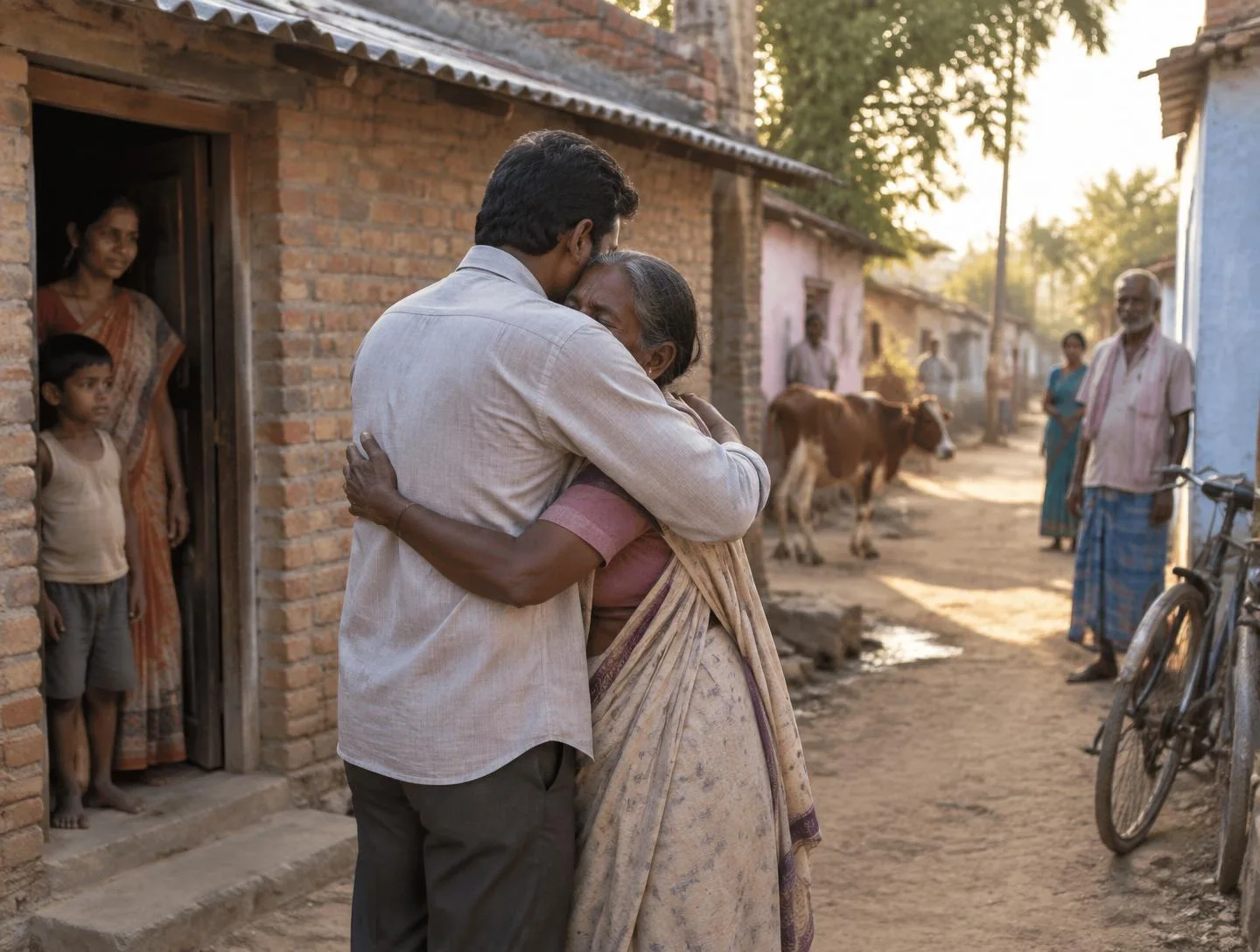
He showed the neighbours his childhood photos and explained who he was looking for. Soon he was taken to his mother. She still lived nearby and had never stopped hoping that her son was alive. It was then that Saroo also learned the bitter news: his brother Guddu had died not long after Saroo disappeared.
What happened next
In 2013 Saroo Brierley published his memoir, A Long Way Home. In 2016 it was adapted into the film Lion, which received six Oscar nominations. Vanity Fair also told the story of his search in detail.
Memory that leads home
Saroo did not find his way home through documents; there were none. He was guided by small things a child remembered: a dam, a station, a turn in the street. Twenty-five years later, those memories became his map.
This story is a reminder of how much places matter in family memory. The name of a town, a street, a house number, a school, the river where the children swam: all of this is worth writing down alongside names and dates. For grandchildren, these are not details but a road to their roots.
What to record about family places today
- Full names and addresses. Town, village, district, street and house number for every place the family lived. Place names change, so note the old versions too.
- Landmarks your elders remember. The church opposite, the well on the corner, a bridge, a school. Details like these helped Saroo recognise his home.
- Photos of places, not just people. Photograph the house, the yard and the street, and note when and where each picture was taken.
- Teach children the essentials. A child should learn their full name, surname, address and a parent's phone number by heart as early as possible.
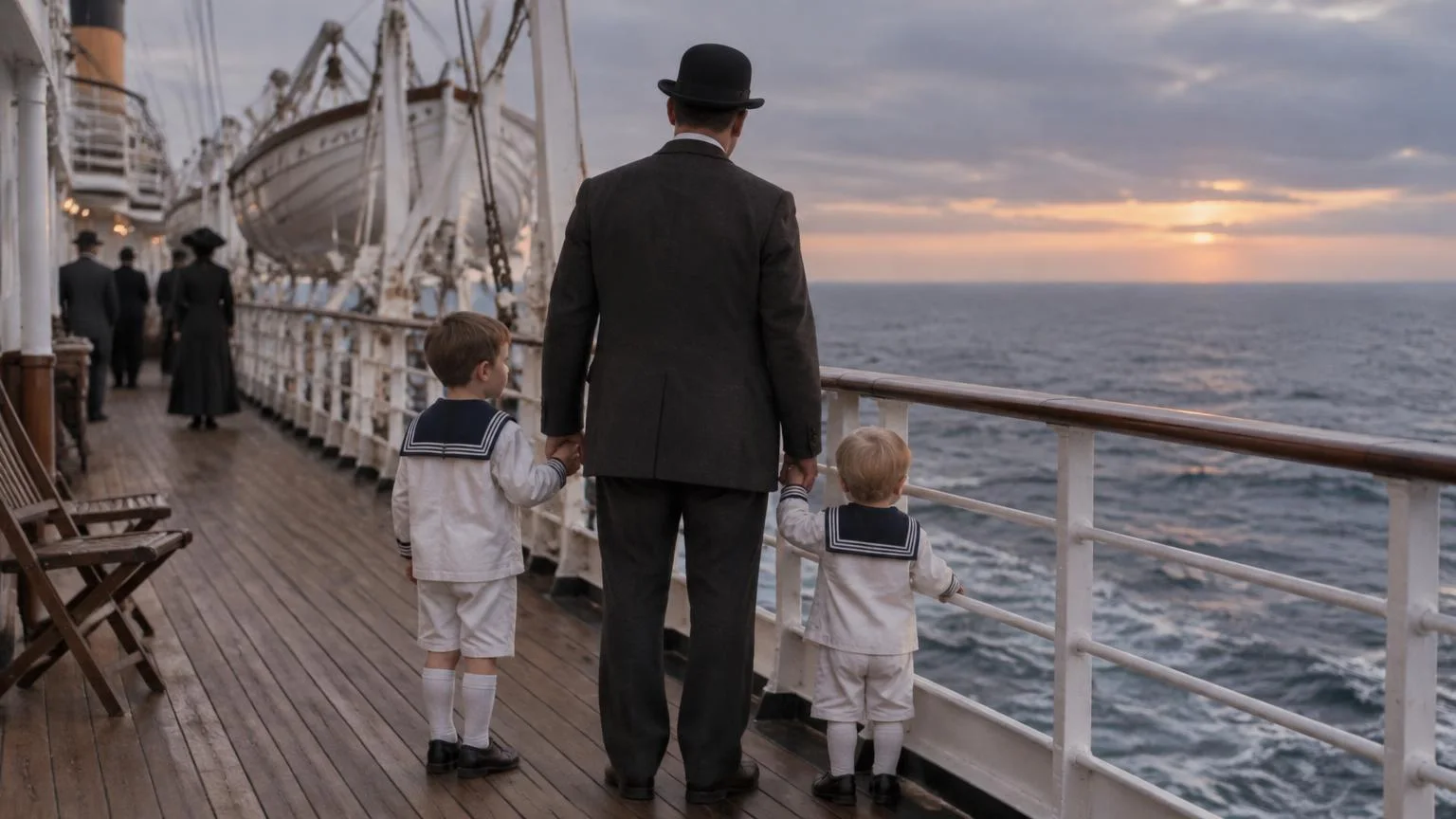
Another true story of a family reunited by one small clue is "Lolo and Momon", about two boys from the Titanic. You will find the story of Annie Moore of Ellis Island in "One Family, a Thousand Journeys". And to start your own tree, read how to start a family tree from scratch.
Start your family tree in AEEVOX: for every person, add not only a name and dates but also the places where their life unfolded.
Sources
- BBC News — Little boy lost finds his mother using Google Earth (2012)
- Google — A long way home with help from Google Earth (2013)
- Vanity Fair — A Home at the End of Google Earth (2012)
All images in this article are artistic illustrations and reconstructions created for AEEVOX. They are not historical photographs or portraits of real people.